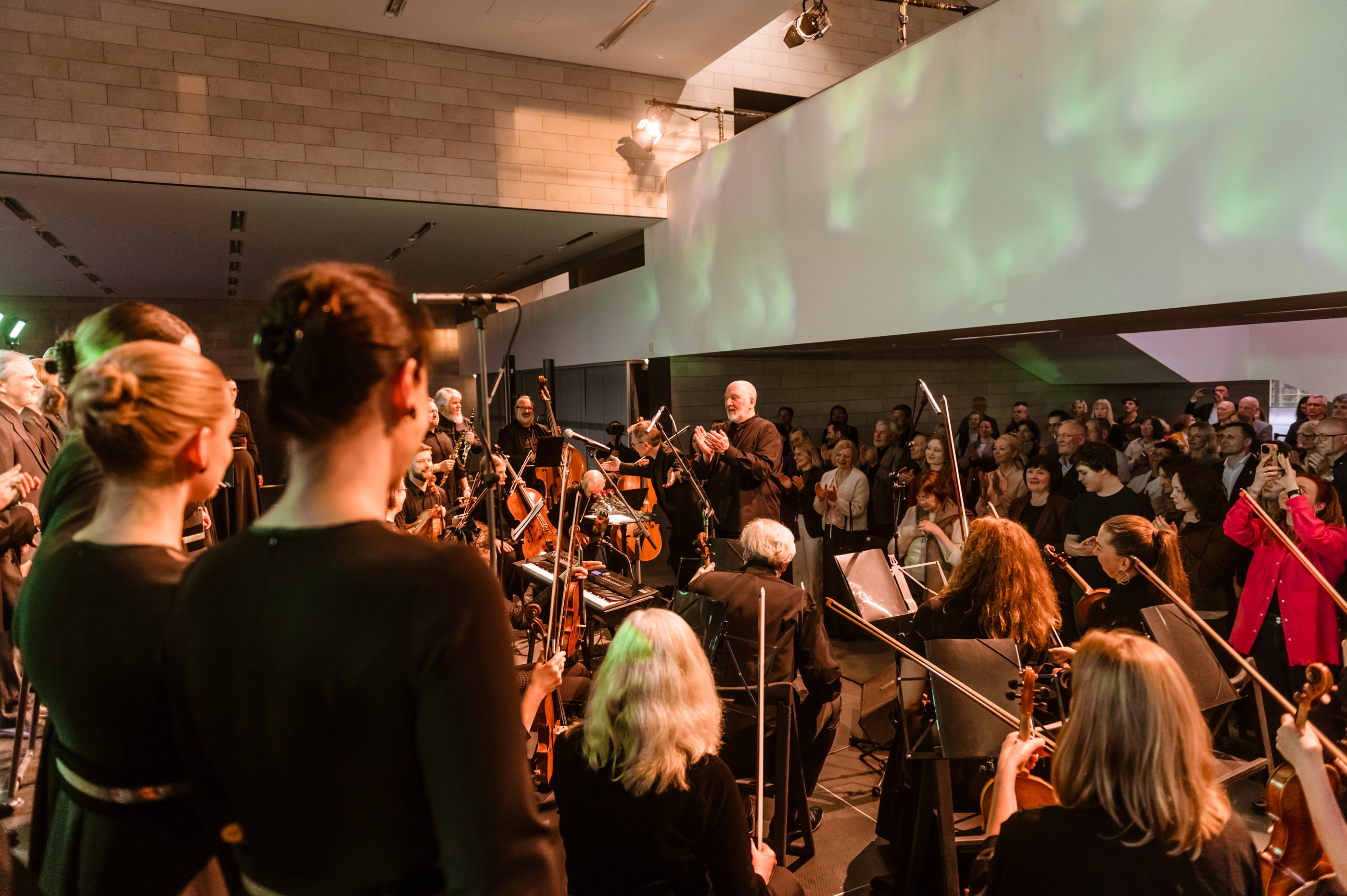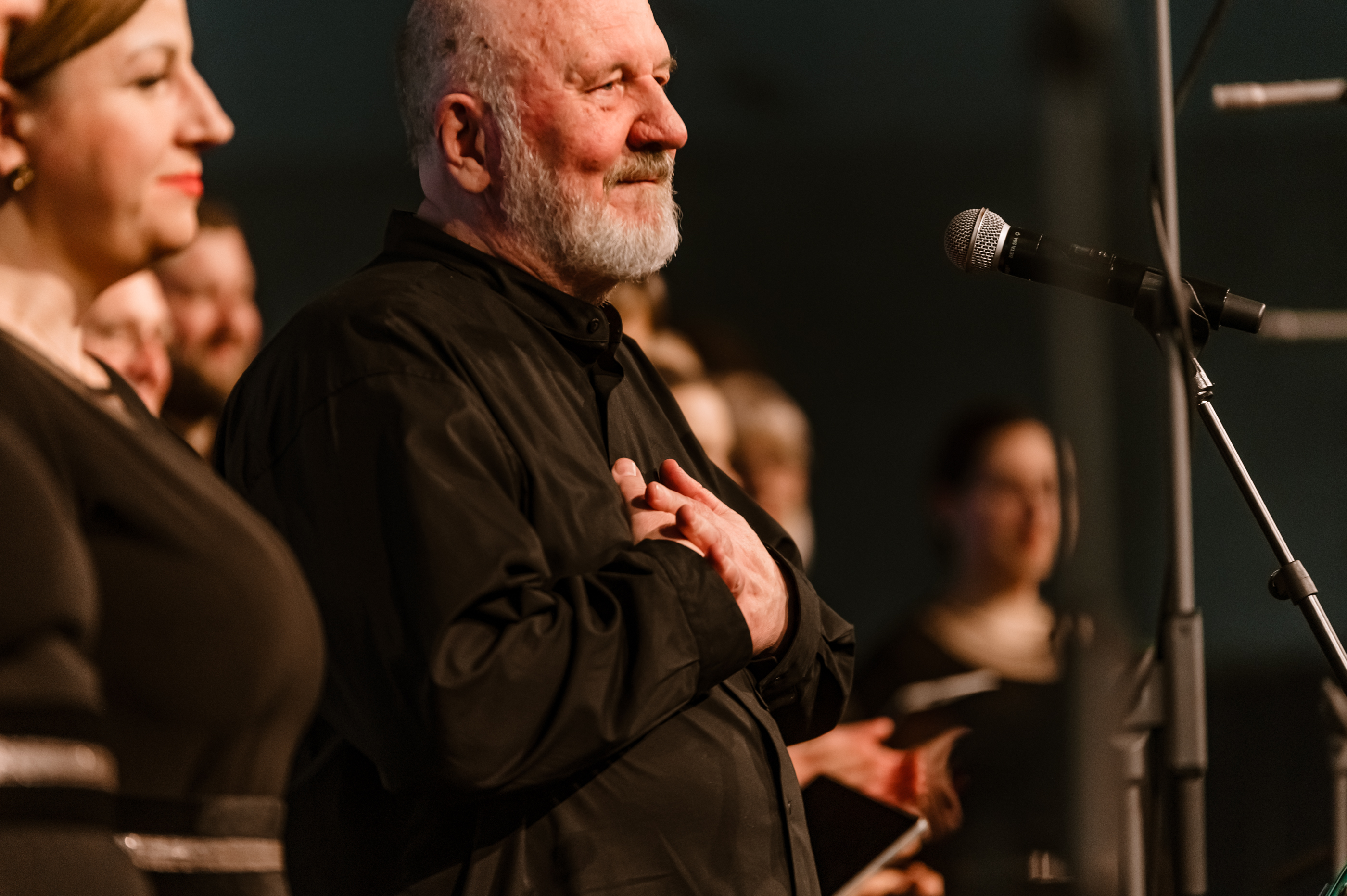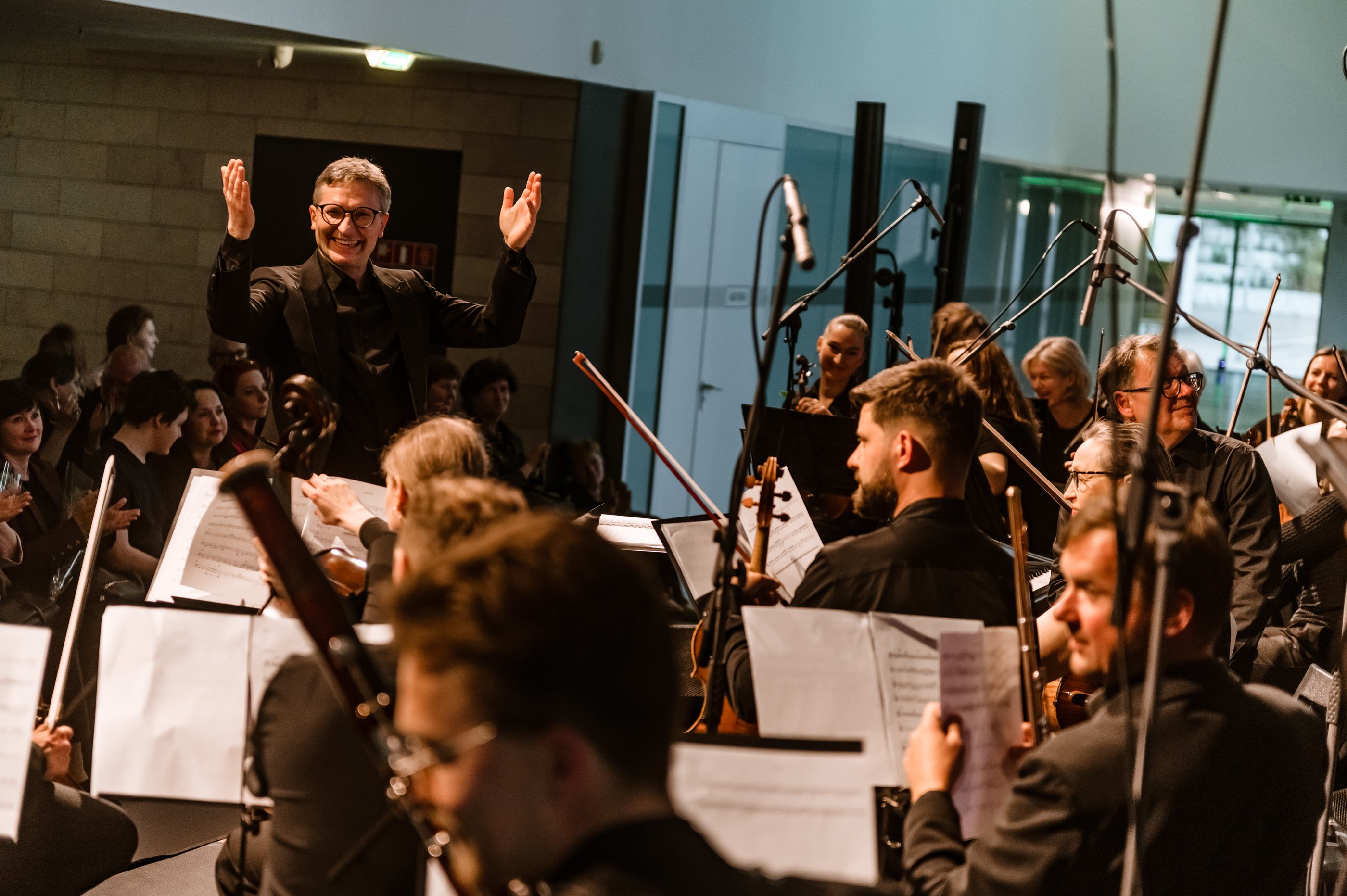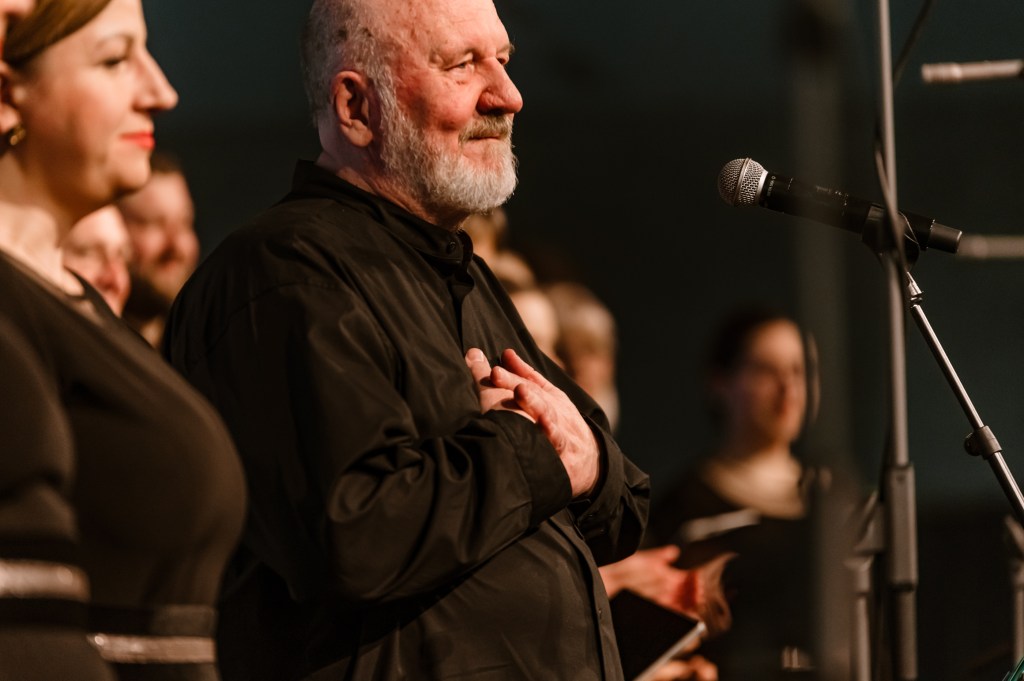
Yesterday’s Vilnius Spring Festival concert, If We Were to Return, held at the National Gallery of Art, became a special encounter with one of the most distinguished creators of Lithuanian music — composer Laimis Vilkončius. Together with the choir Jauna Muzika, the St. Christopher Chamber Orchestra, and conductor Modestas Barkauskas, he invited the audience on a musical journey through different stages of his creative life, filled with beloved songs and personal stories.
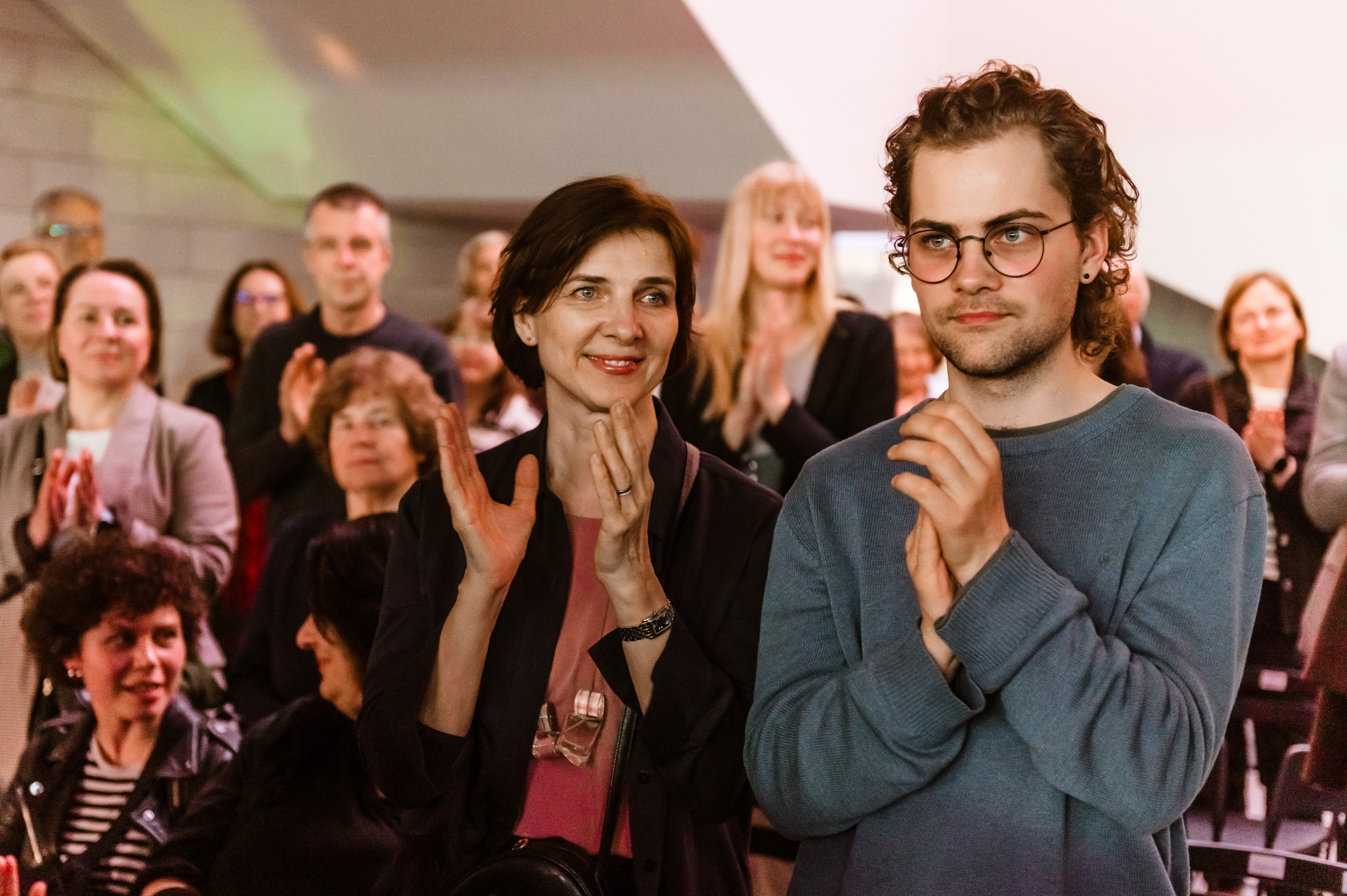
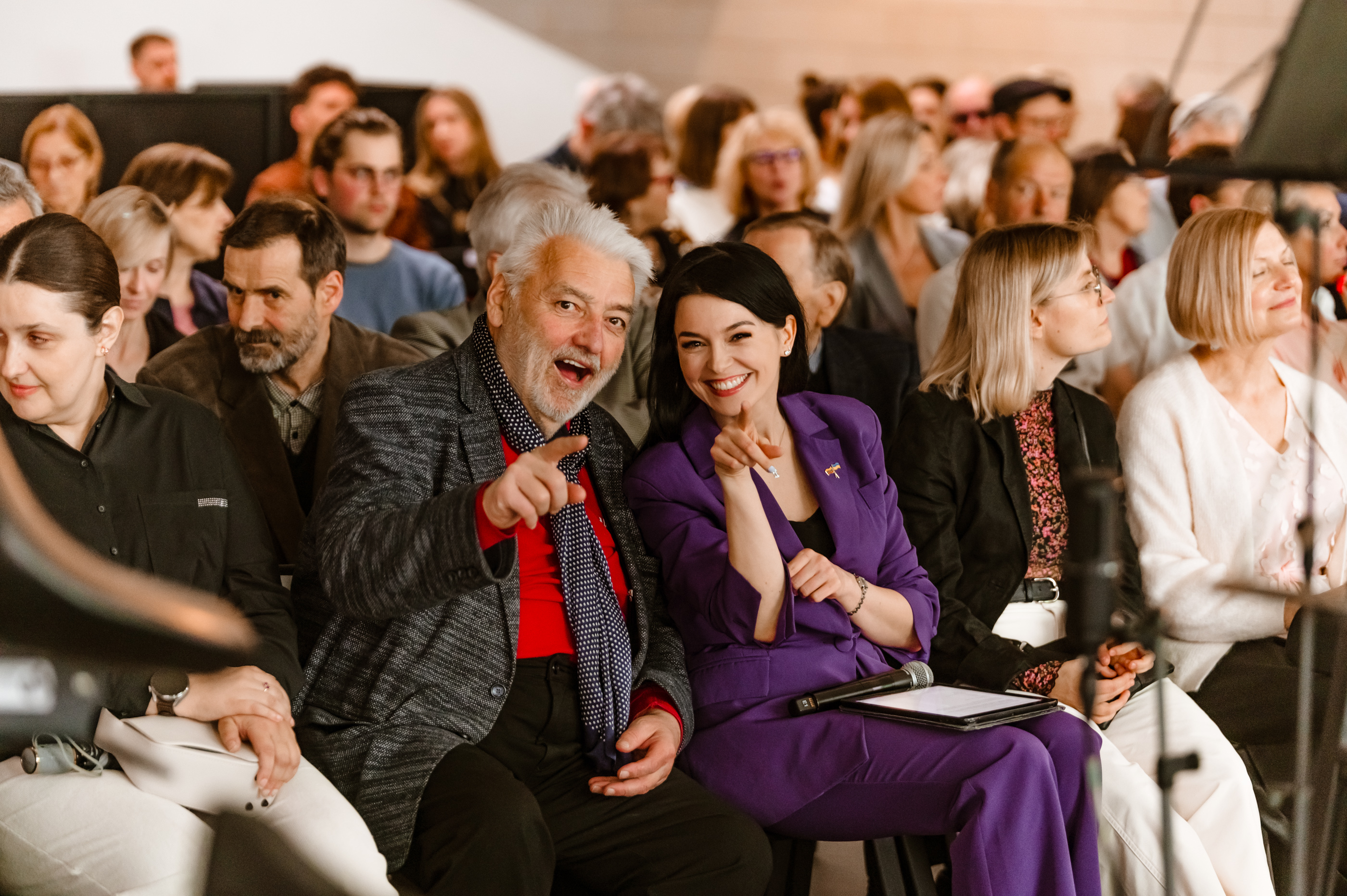
In a packed hall at the National Gallery of Art, audiences heard works that have become part of the golden treasury of Lithuanian music — The Ship, Will You Preserve My Love, And We Keep Rushing, Because of That Song, and many other compositions by Vilkončius, all warmly received by the audience. Throughout the evening, not only different musical genres but also generations came together, proving once again that the composer’s music remains relevant and meaningful today.
If We Were to Return was neither a retrospective concert nor an anniversary celebration. Rather, it became a living, breathing creative dialogue between the composer, the performers, and the audience. During the evening, Vilkončius not only performed his works but also shared memories, stories from his creative journey, and reflections on music, text, and time.
“Creativity has no age limit,” Laimis Vilkončius said before the concert, and the atmosphere of the evening reaffirmed those words. After spending many years focused on operas, ballets, and large-scale compositions, the composer has returned to song — the genre that accompanied him throughout his artistic career and became an inseparable part of Lithuania’s musical culture.
A special dimension was added to the concert by the choir Jauna Muzika and the St. Christopher Chamber Orchestra, whose arrangements allowed familiar works to reveal new colours and meanings. Under the direction of Modestas Barkauskas, artistic director and conductor of the orchestra, and Vaclovas Augustinas, artistic director and conductor of the choir, the ensembles created a sensitive, rich, and dynamic musical tapestry that embraced both lyrical fragility and dramatic intensity.
The organizers of Vilnius Spring Festival are delighted that this year’s programme has become a place for such encounters — where creators of the city, different musical generations, and audiences come together in a shared artistic experience.
The festival continues next week at the National Gallery of Art. On May 28, Vilnius Spring Festival will conclude with the world-renowned Swedish vocal quartet Ringmasters, presenting their anniversary programme 20 Years Good Vibrations.
More information: springfestival.lt